
Which e-signature platform has the best free version?
Discover which e-signature platforms offer genuine free versions versus limited trials, and how they compare on documents, users, and features.
Published · Updated
AI-generated image
Quick answer · the 30-second read
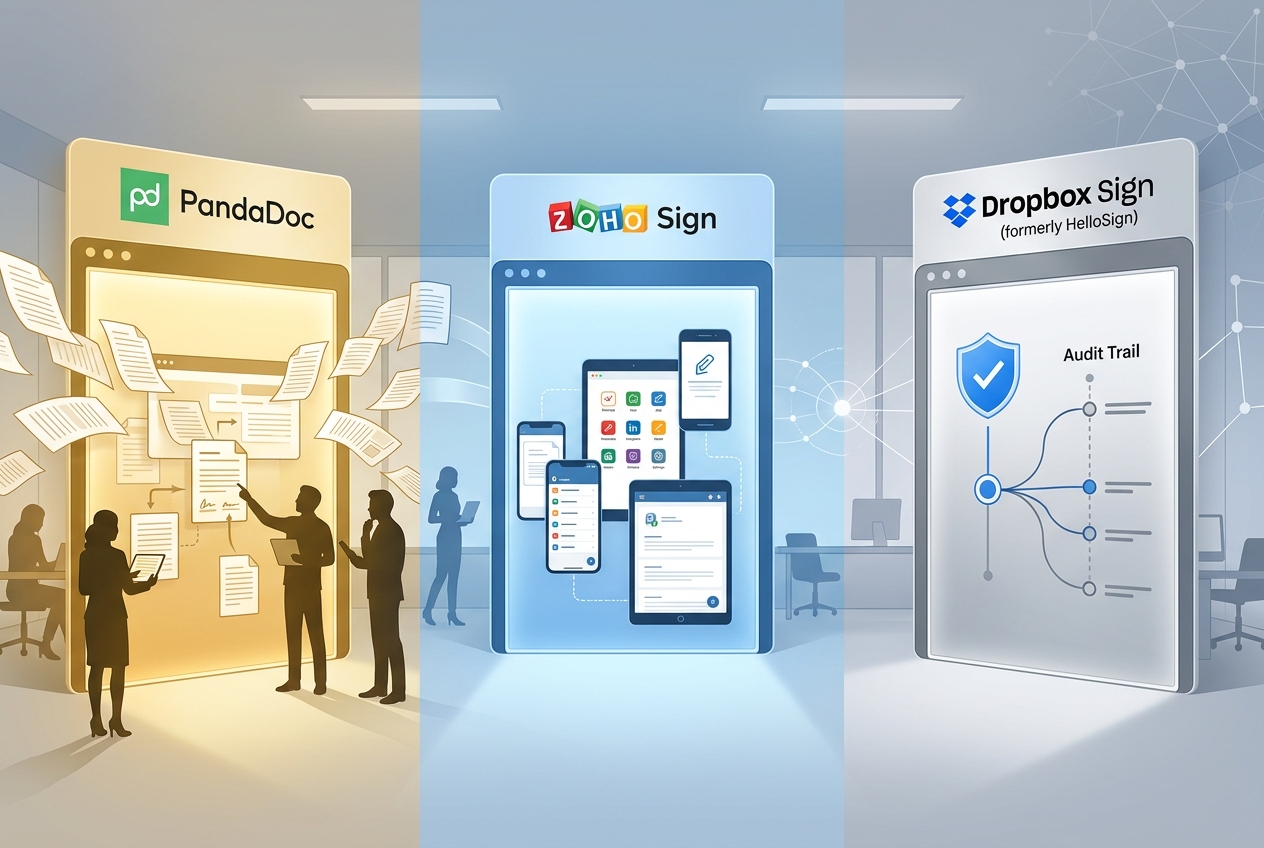
Of the six platforms compared on this site, three offer a genuine permanent free version - PandaDoc, Zoho Sign, and Dropbox Sign. PandaDoc's free version is the strongest of the three, offering 60 documents a year, unlimited seats, and 5 templates. Zoho Sign and Dropbox Sign both restrict their free version to a single user with no templates at all. Docusign, SignNow, and Adobe Acrobat Sign have no permanent free version, offering only a time-limited free trial before a paid subscription is required.
"Free version" gets used loosely across e-signature marketing. Some platforms mean a permanent account with a capped monthly allowance, and some mean a free trial that expires and requires payment once the trial period ends. This guide separates the two properly and compares what each genuine free version actually includes.
Which platforms have a genuine, permanent free version?
Platform | Documents included | Users | Templates | Notable features/limits |
|---|---|---|---|---|
60/year (5/month) | Unlimited seats | 5 | 2 recipients per document, unlimited fillable fields and storage | |
60/year (5/month) | 1 user | 0 | No team collaboration, no developer API access | |
36/year (3/month) | 1 user | 0 | Unlimited self-signing, verified audit trail included on every document |
Source: PandaDoc Free plan guide, Zoho Sign pricing page, and Dropbox Sign's own help centre on its free plan, all checked 2 July 2026.
Which platforms only offer a free trial, not a free version?
- Docusign offers a 30-day free trial with no credit card required. There is no permanent free version for sending documents; a separate "Free Edition" exists for signing documents sent by others, not for sending them yourself.
- SignNow offers a 7-day free trial with no credit card required, and no permanent free version beyond that.
- Adobe Acrobat Sign has no standalone free version; Acrobat Pro for teams and Acrobat Studio for teams both offer a free trial limited to 10 licences, but e-signature capability requires a paid Acrobat subscription once the trial ends. Separately, Adobe also offers a 30-day Acrobat Sign enterprise trial through its sales-led product, which includes features like bulk sending and Salesforce integration not available on the team-plan trial.
None of these three should be described as having a free version in the way PandaDoc, Zoho Sign, or Dropbox Sign do. A trial is a time-limited evaluation period. A free version continues indefinitely at no cost, within its stated limits.
Which of the three genuine free versions is the best?
PandaDoc's free version is the clearest leader of the three. It matches Zoho Sign's 60-document annual allowance and beats Dropbox Sign's 36, while being the only one of the three to include unlimited seats and reusable templates. Both Zoho Sign and Dropbox Sign restrict their free version to a single user with zero templates, meaning every document has to be prepared manually each time it's sent, with no way to add a second person to the account.
Zoho Sign and Dropbox Sign each hold a narrower advantage of their own. Zoho Sign's free version includes native apps for iOS, iPadOS, Android, Windows, and macOS. It also includes cloud storage import and export from Google Drive, OneDrive, Dropbox, Box, and Zoho WorkDrive. Neither feature is confirmed on PandaDoc's or Dropbox Sign's free version. Dropbox Sign's free version includes a verified, time-stamped audit trail on every signed document, the same standard used on its paid tiers. This isn't stated as a feature of PandaDoc's or Zoho Sign's free version specifically.
Our verdict
Is a free e-signature version enough for a small business? PandaDoc's free version is the only one of the three built for more than a single person, and the only one with any template reuse at all, which makes it the most usable free option for a small business specifically. Zoho Sign and Dropbox Sign both suit a solo user sending occasional, one-off documents rather than a team, with Zoho Sign better suited to someone who wants broad app and cloud storage support, and Dropbox Sign to someone who wants a fully audited document trail without a subscription. Anyone needing more than 2 recipients per document, a second user, or more than 60 documents a year should treat any of the three as a way to test the platform, not a long-term solution.


